
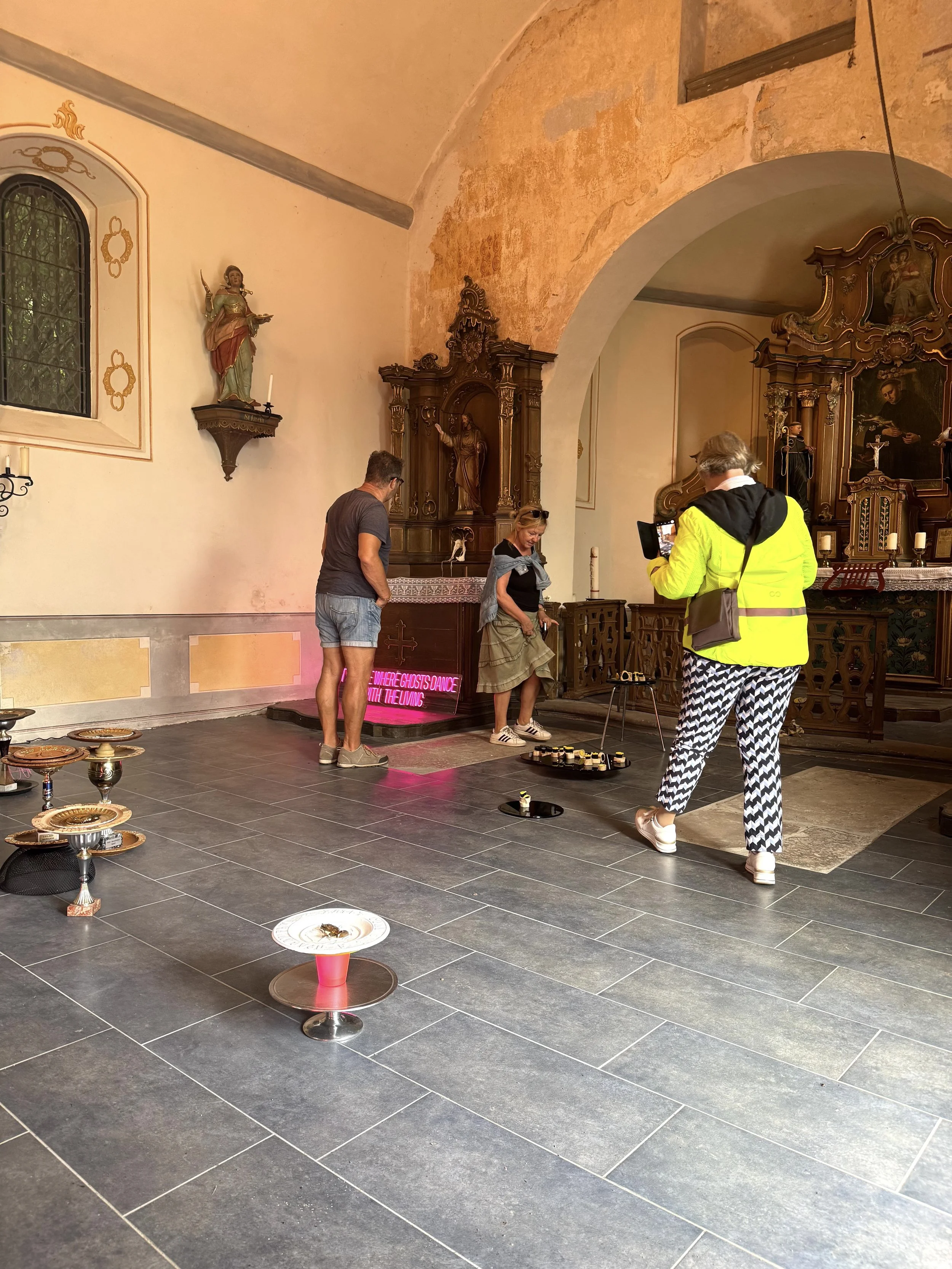
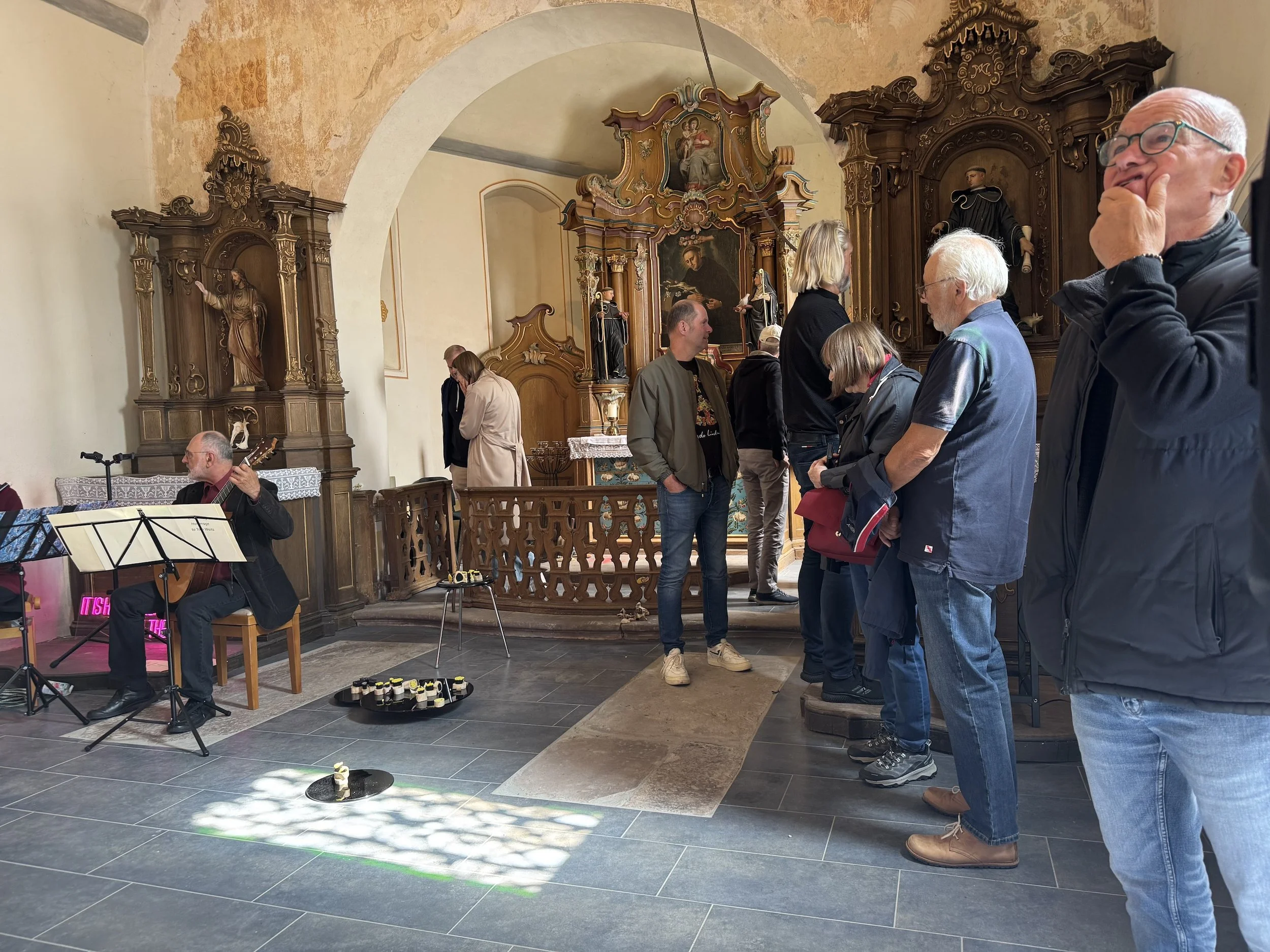
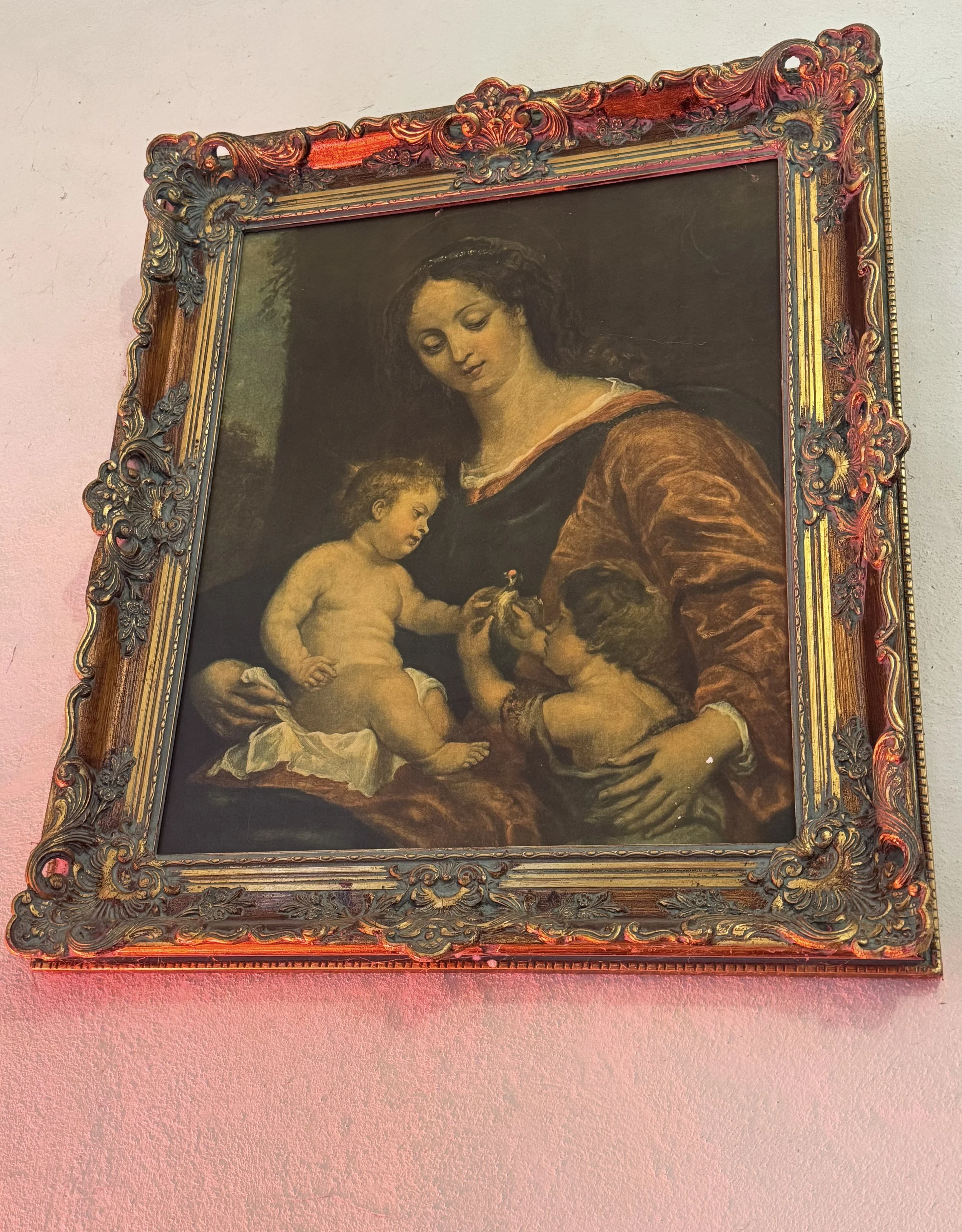

An exhibition of site-related sculpture and video at St. Jost Lepra-Kapelle, Trier-Biewer, Germany.
Material
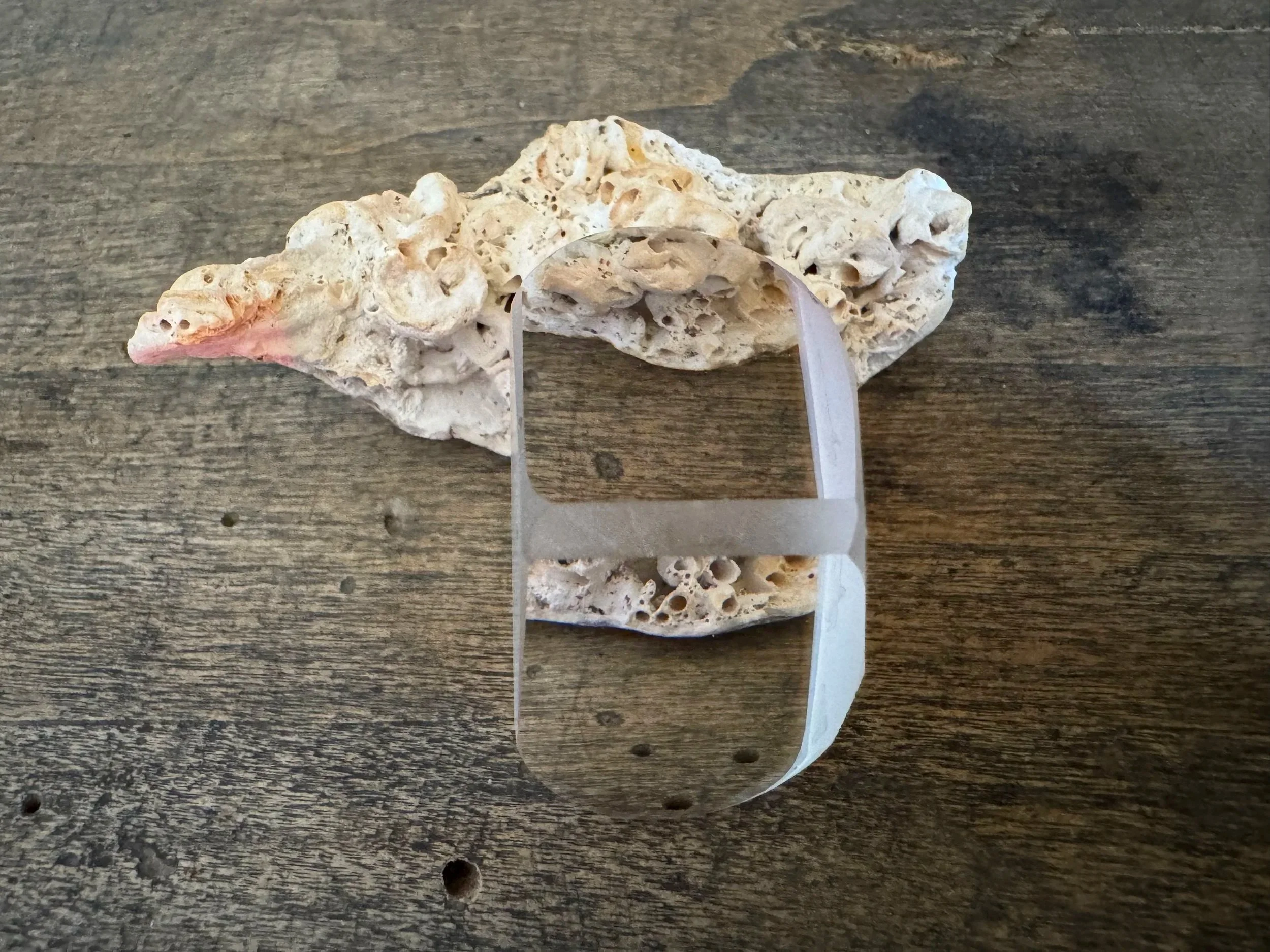
Coral, wood worm, scientific prism distortion
Information
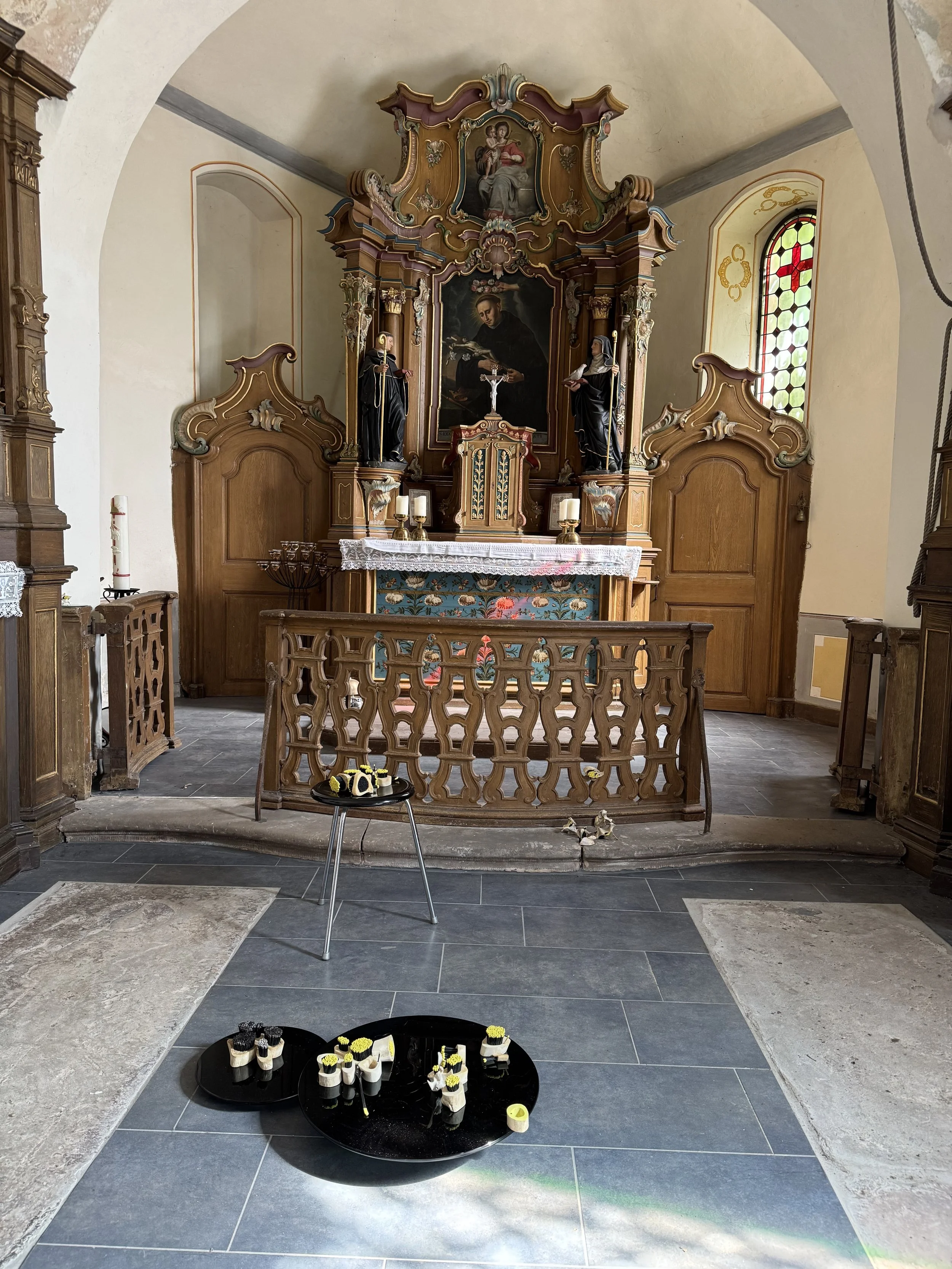
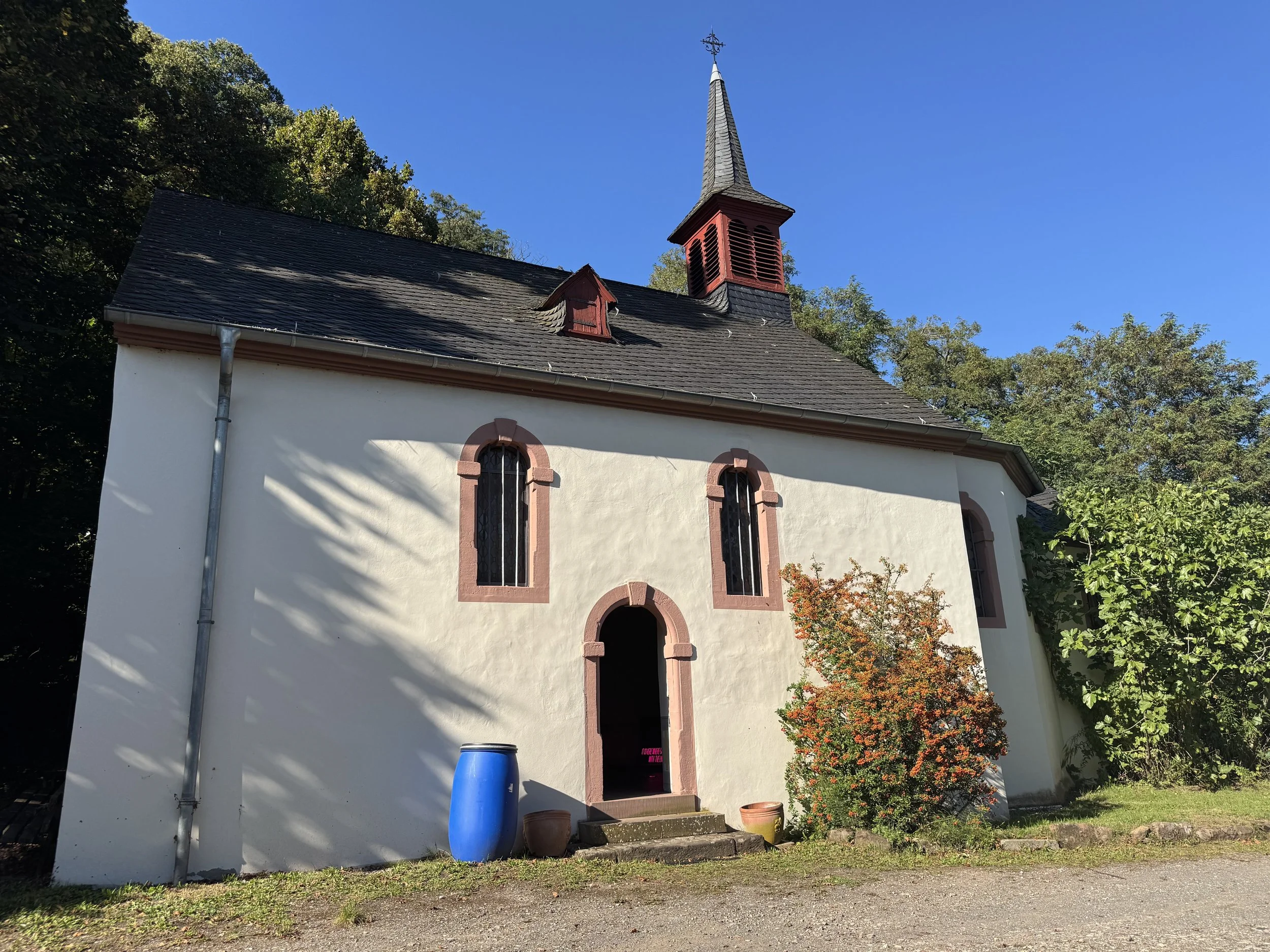
“SEUFZER” at St Jost’s Lepra-Kapelle, Trier-Biewer is a site-specific project. Works resonate with aspects of the historical site from the 12th Century and the current church built from alms collected by two young leper girls in the 19th Century. The bell carries the date 1865. The site includes a now closed church preserved as a monument, several cottages that once formed the hospital facilities and a modest ground. There is a small cemetery over the road, hidden and only discernible when the local council trims back trees twice a year. The Lepra-Kapelle lies nestled at the bottom of a slope, in a well between the road and the railway at the beginning of Biewer village. It has a main door which was used by for the general congregation and a separate leper’s entrance at the back. Once inside, a now absent decorative grill separated the two parties. At a time prior to the medical understanding of the cause and spread of leprosy there would be no exclusion to the spiritual life, but also no earthly mingling. The ground outside is where the lepers once lived in simple wooden huts. At the top of the slope and across the road is a stone cross marking the site where food donations were placed to support the colony’s physical needs. The small graveyard ‘Kleines Paradies’ tucked into the forest edge is where their bodies were transported upon death. Their arrival at St. Jost’s was already considered a civil death and mourned as a living funeral. Upon actual death they were placed without ceremony under a scattering of earth.
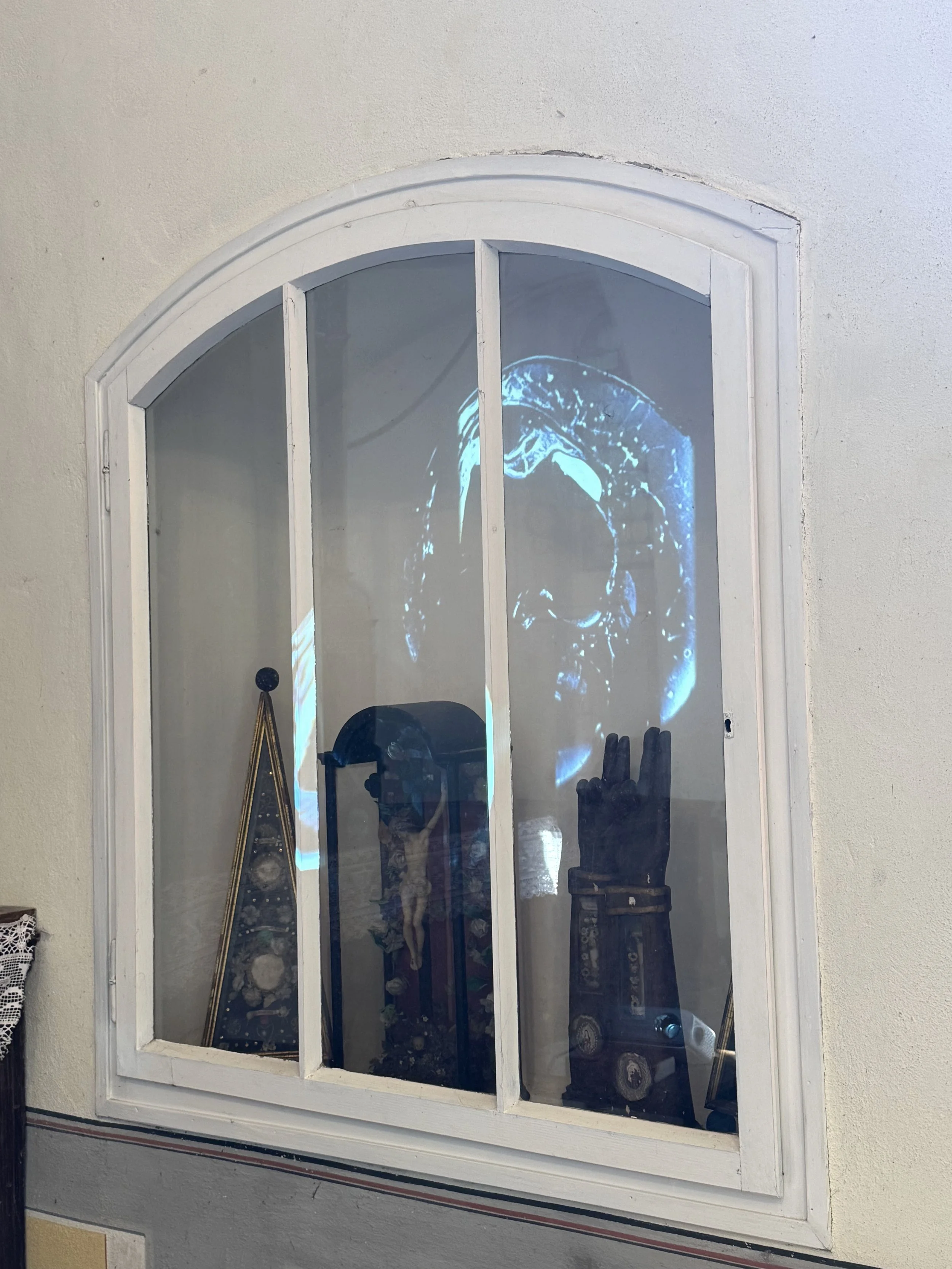
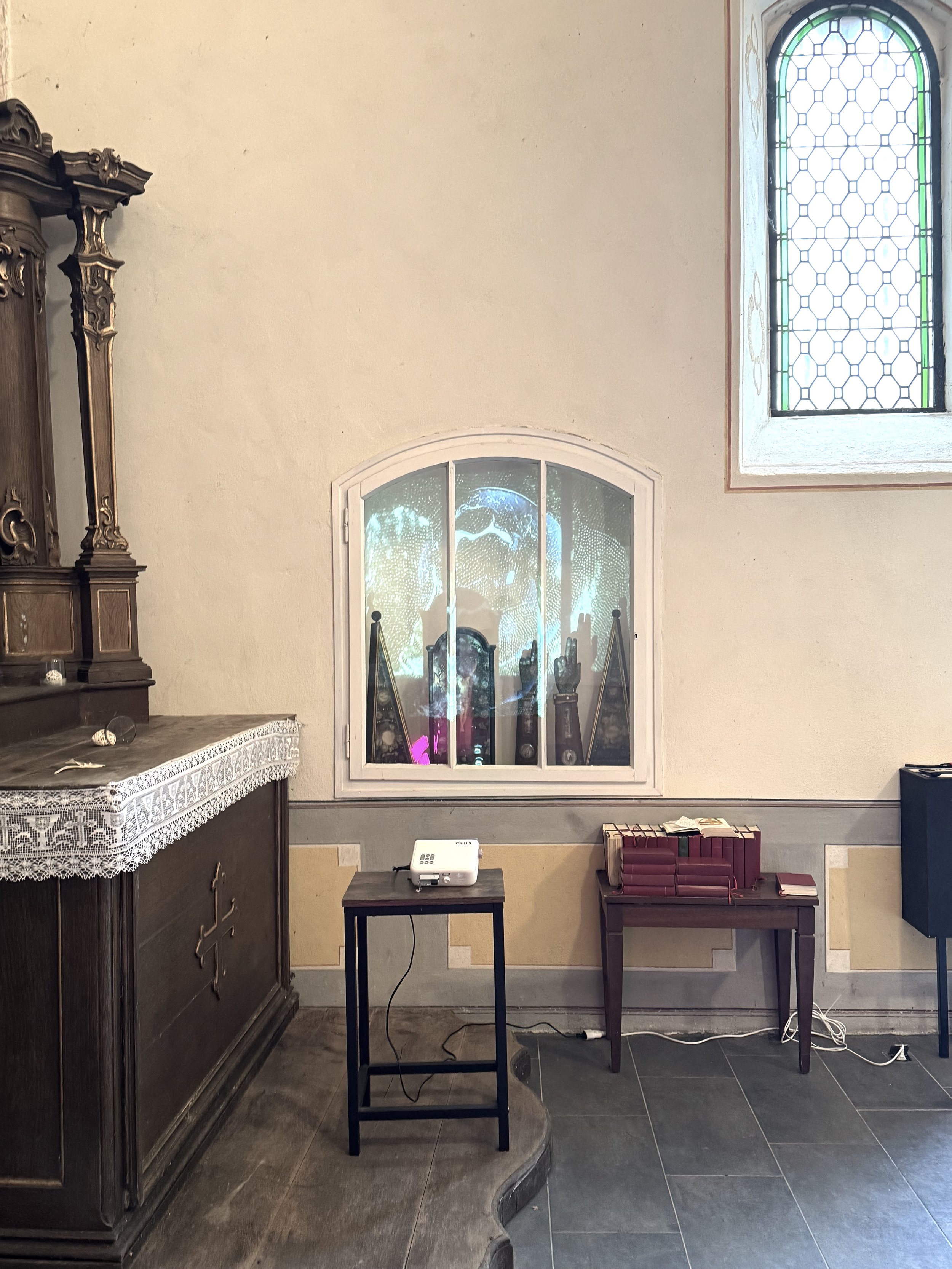
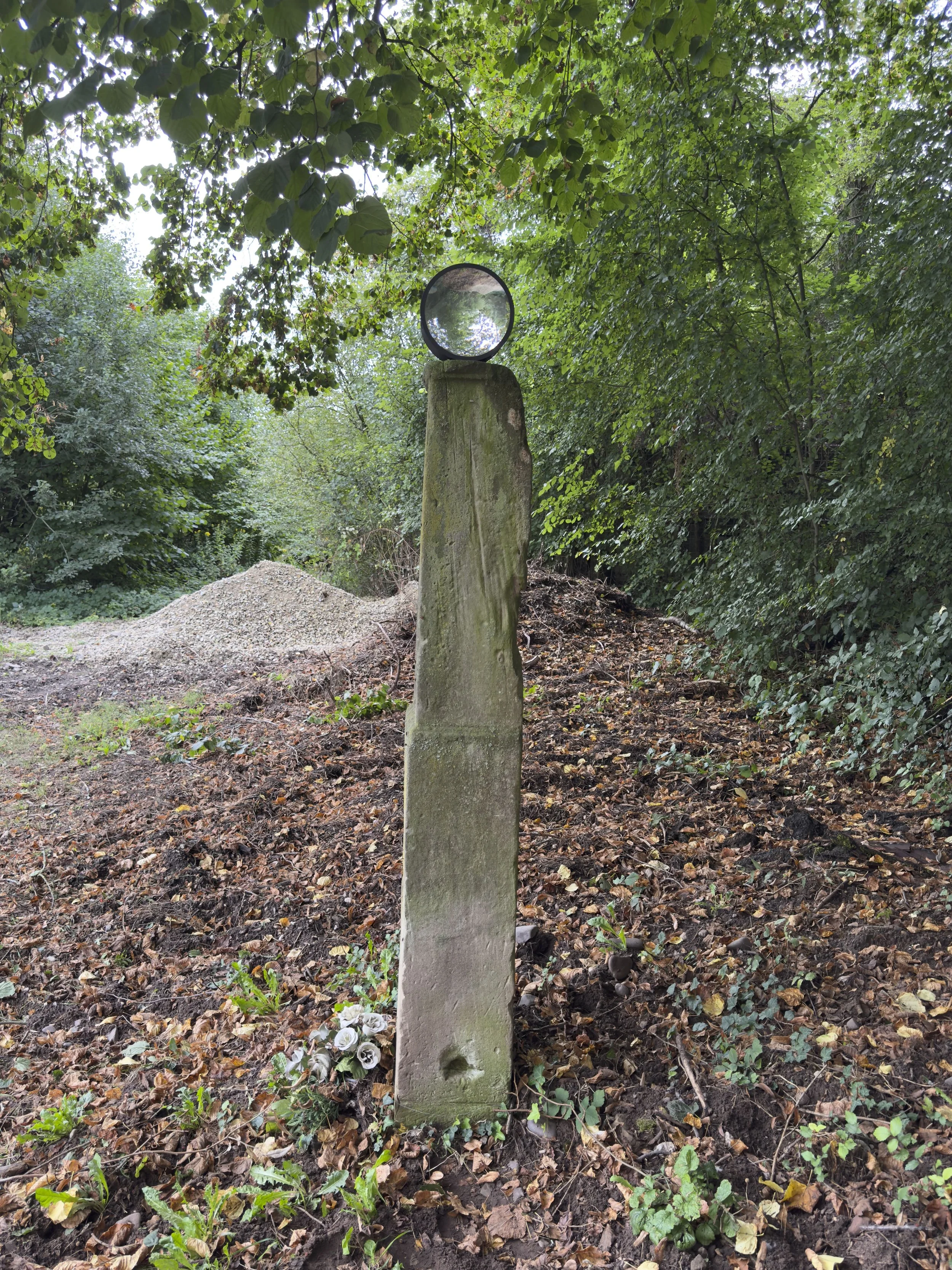
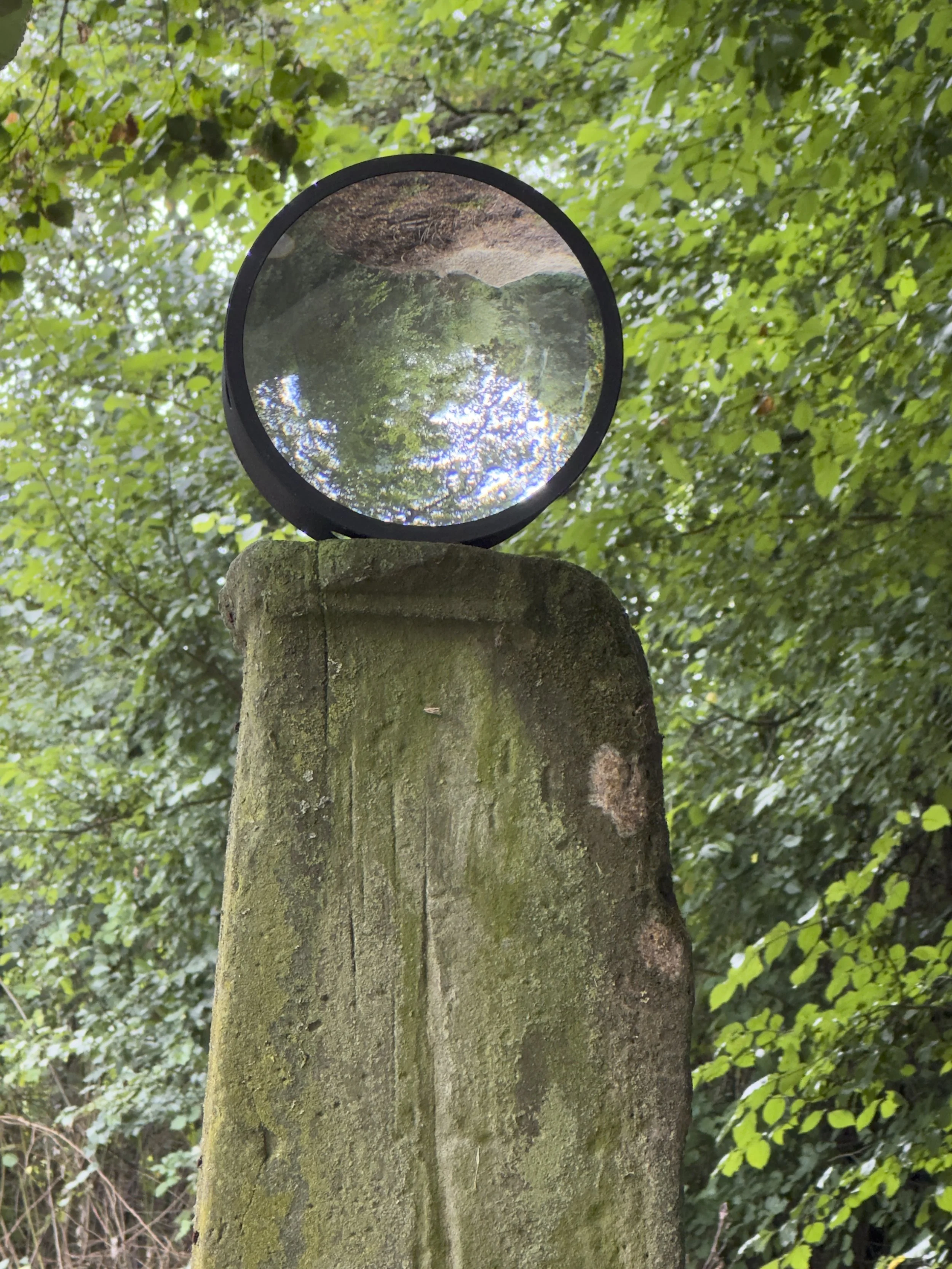
“Heaven on Earth” stands directly outside of the leper’s entrance and uses a large lens to create an inverted view of the grounds, bringing the skies down to rest and suspending the earth above. “Falling Holding” is a video projection that passes over the reliquary cabinet. It places the micro-world of the body through medical scans alongside a sense of universal vastness.
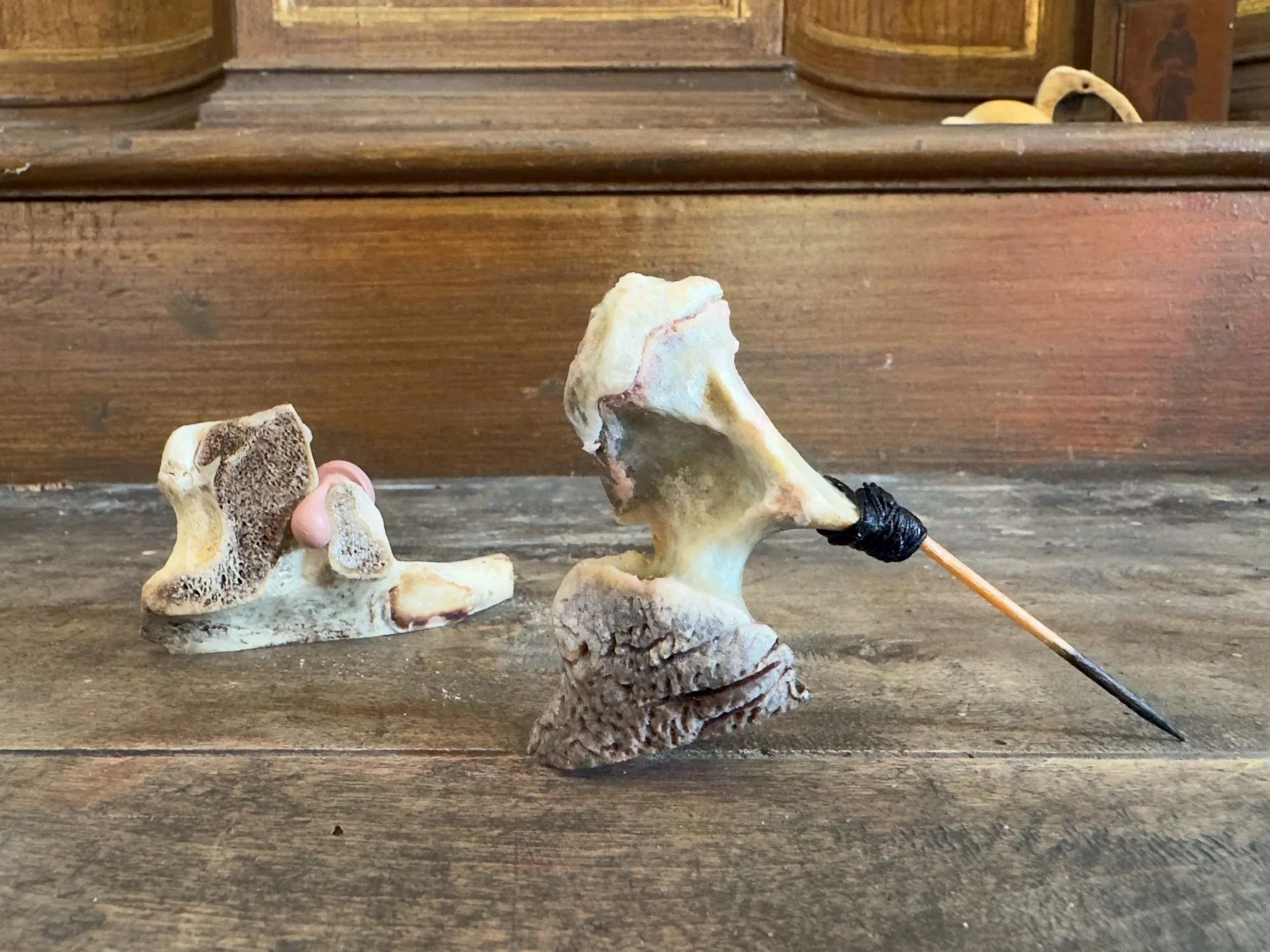
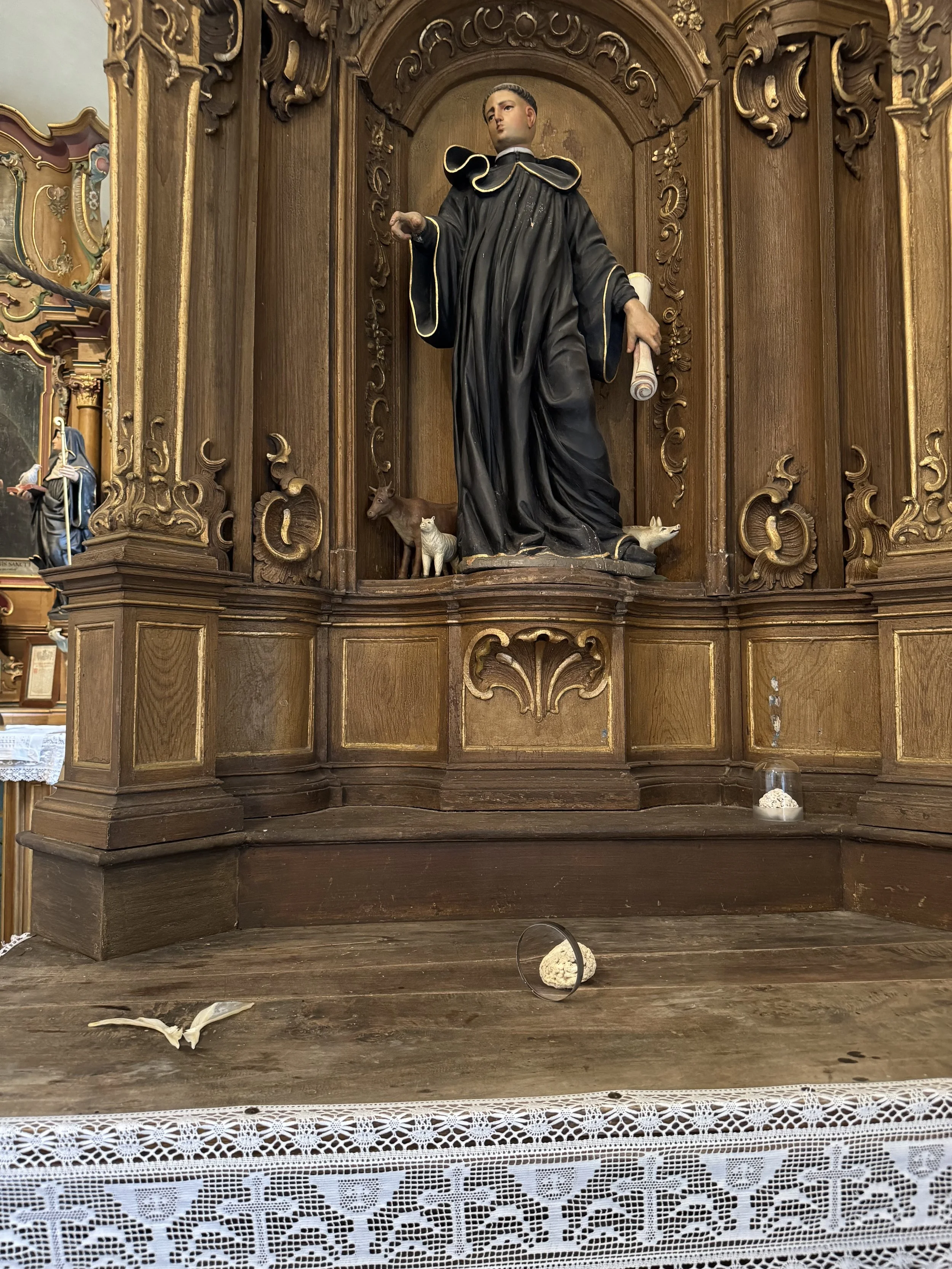
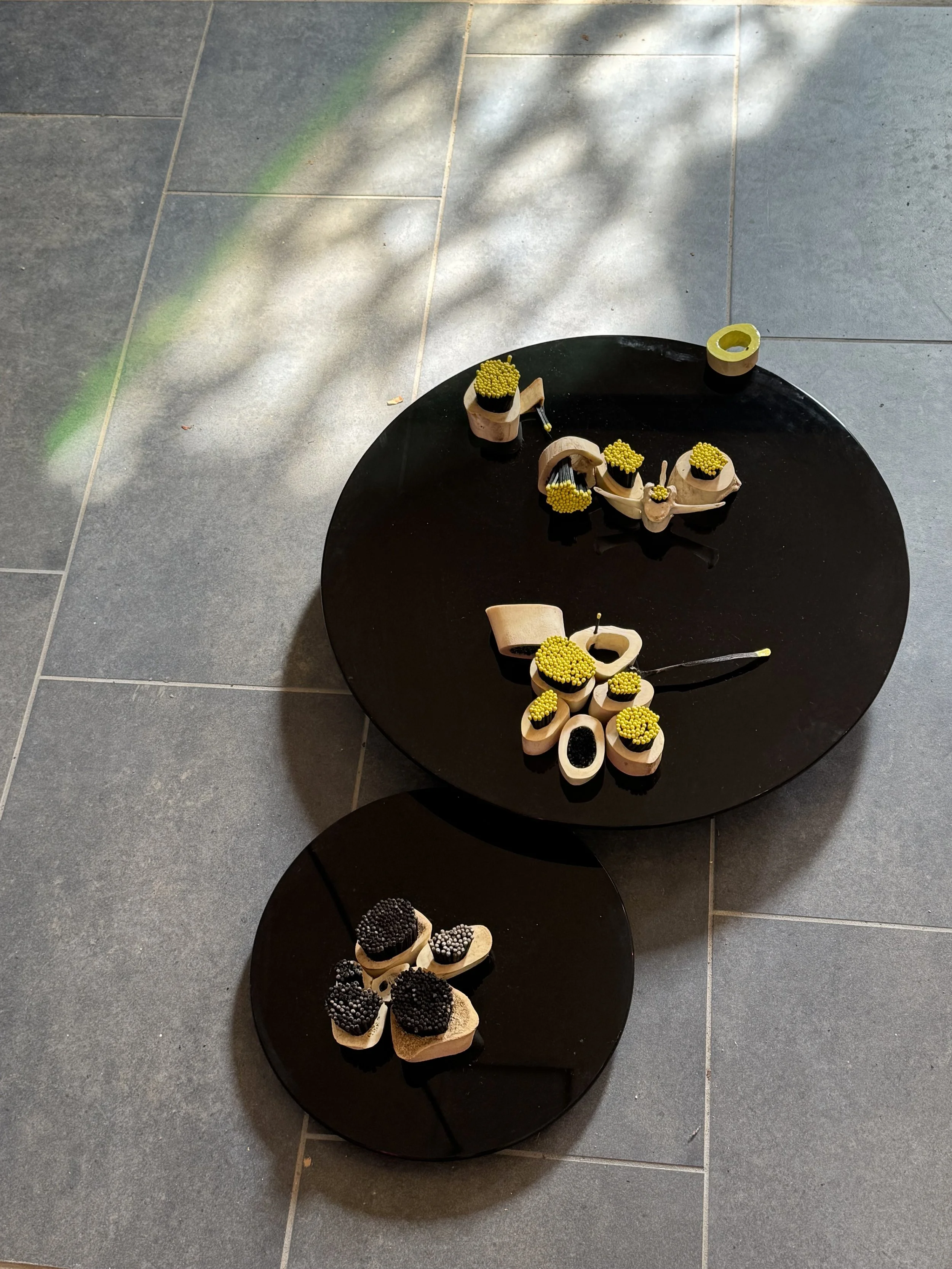
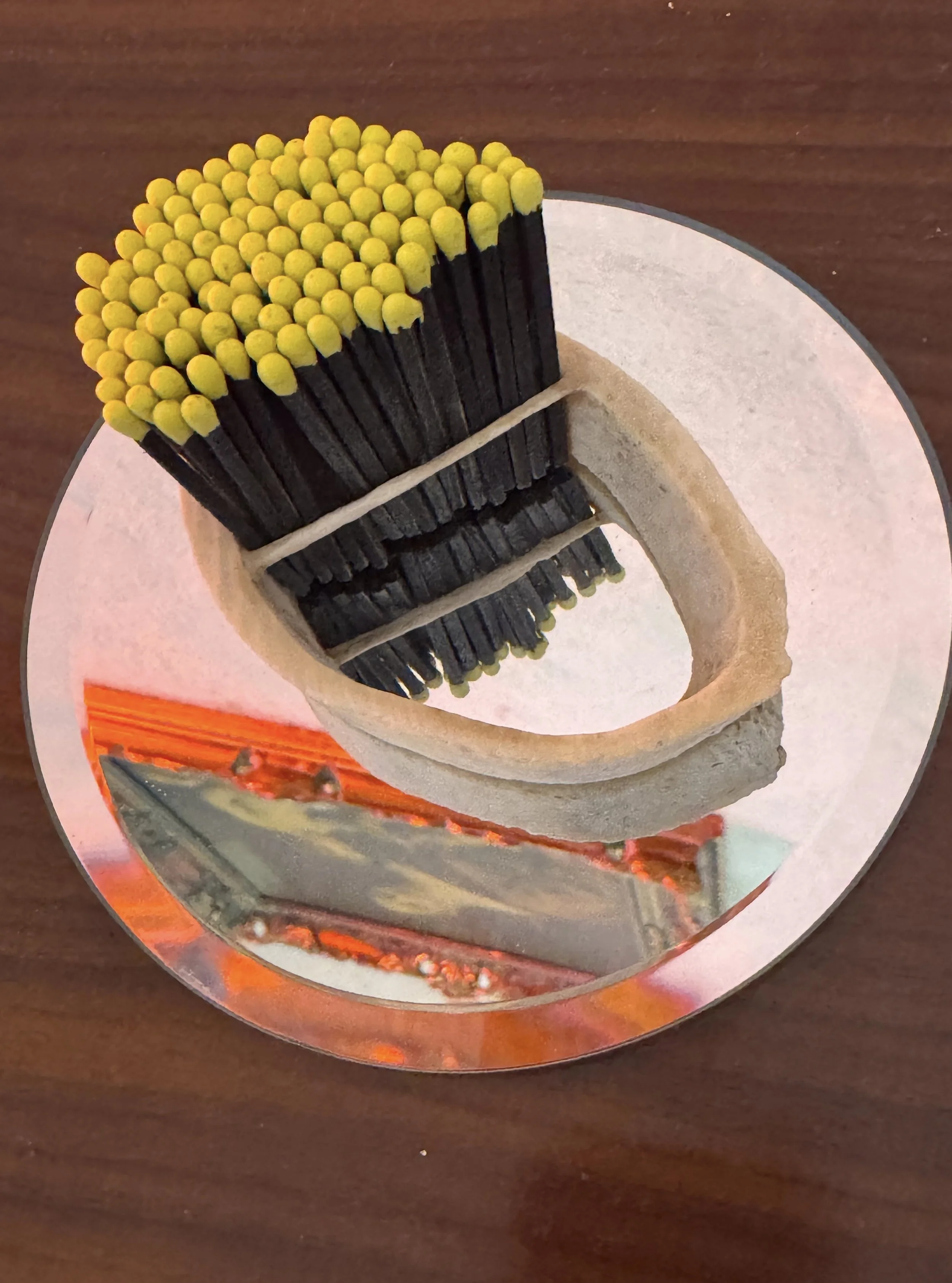
Short-lived matches form isolated communities and offer a contemporary memento mori to reflect upon the brevity of life. They are contained by bones, resonating with blessed relics in carved jars and altar cabinets. The use of sheep, pig and bovine bones (the animals that surround the figure of St. Francis) questions how we attribute value systems to bodies, and whether common social hierarchies can be deemed ‘just’. They offer a moment of recalibration to shift our thinking.
The neon text “Ghosts Dance” injects the possibility of closeness between those that have already passed and those still here. Dancing raises the spectre of joy across the life and death divide. It continues the artist’s interest in pink light as a physical impossibility of vision. Lacking a specific wave on the electromagnetic spectrum there is no visible light that is pink, yet it exists.
Photo credit
Traci Kelly
Material
L. Bovine bone, rubber teat
R. Bovine bone, tooth pick, ink, thread
Photo credit
Traci Kelly
Material
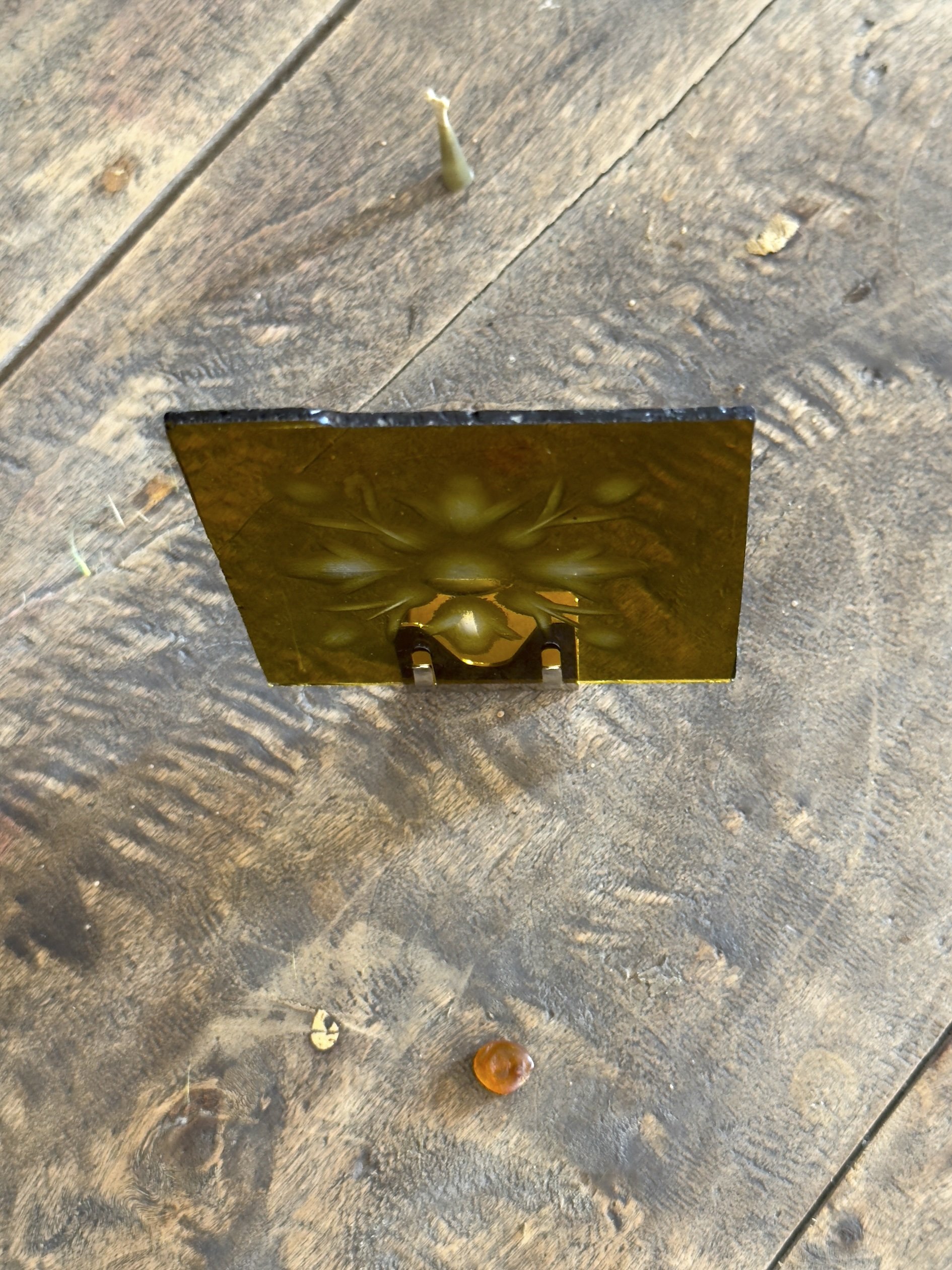
Stained glass, olive tree resin, avian bone, rubber
Photo credit
Traci Kelly
Material
L. Pectoral fins
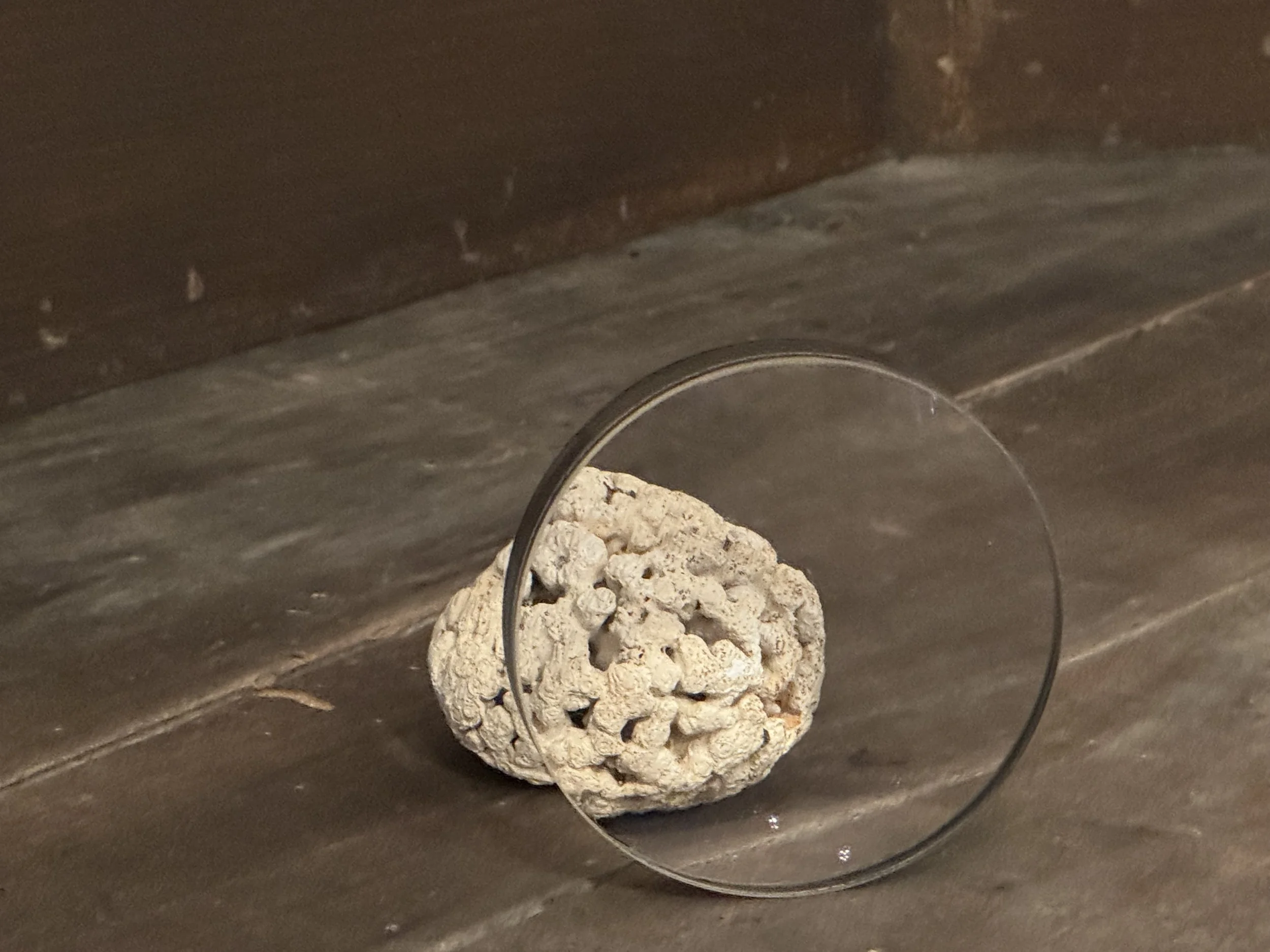
R. Coral, lens, laboratory cloche
Photo credit
Traci Kelly
Material
White coral, lens
Photo credit
Traci Kelly
Material
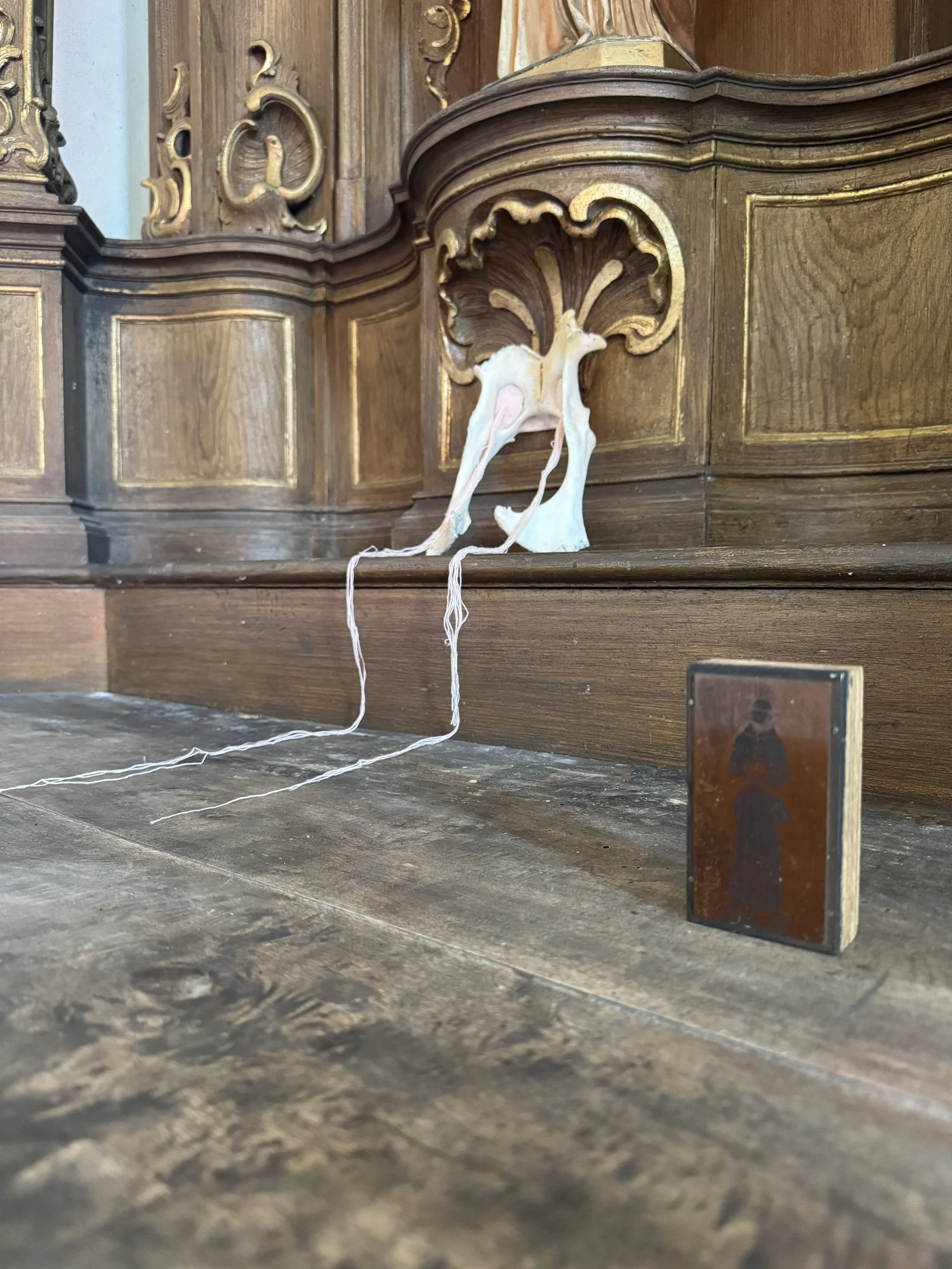
“Cradle” 2025 Sheep pelvis, felt, thread.
Information
Cradle is the found pelvic bone of a sheep softened with felted material and crying-like thread. It is an empty basin and relic of unknown kin evolving new agency.
Shown with found printing block of a ‘Man of cloth’.
Dimensions
Draped: H 63cm x W 18cm D8.5cm
Unfurled: H 78cm x W 18cm D8.5cm
Photo credit
Traci Kelly
Exhibited
Seufzer, Trier, Germany 2025; Profondo, Hüfingen, Germany, 2026.
Material
“Flicker” 2024 onwards. Bovine and sheep bones, matches, glass, stool.
Flicker is an evolving installation with shifting elements. The core element of bones with cavities created by absent marrow are a product of consumption. The matches are a reflection on the brevity of life. Related video works capture fleeting burning and the rising of spirit-like smoke. The bones and the matches both originate in the landscape as grazing cattle and forest areas.
Photo credit
Traci Kelly
Photo credit
Traci Kelly
Material
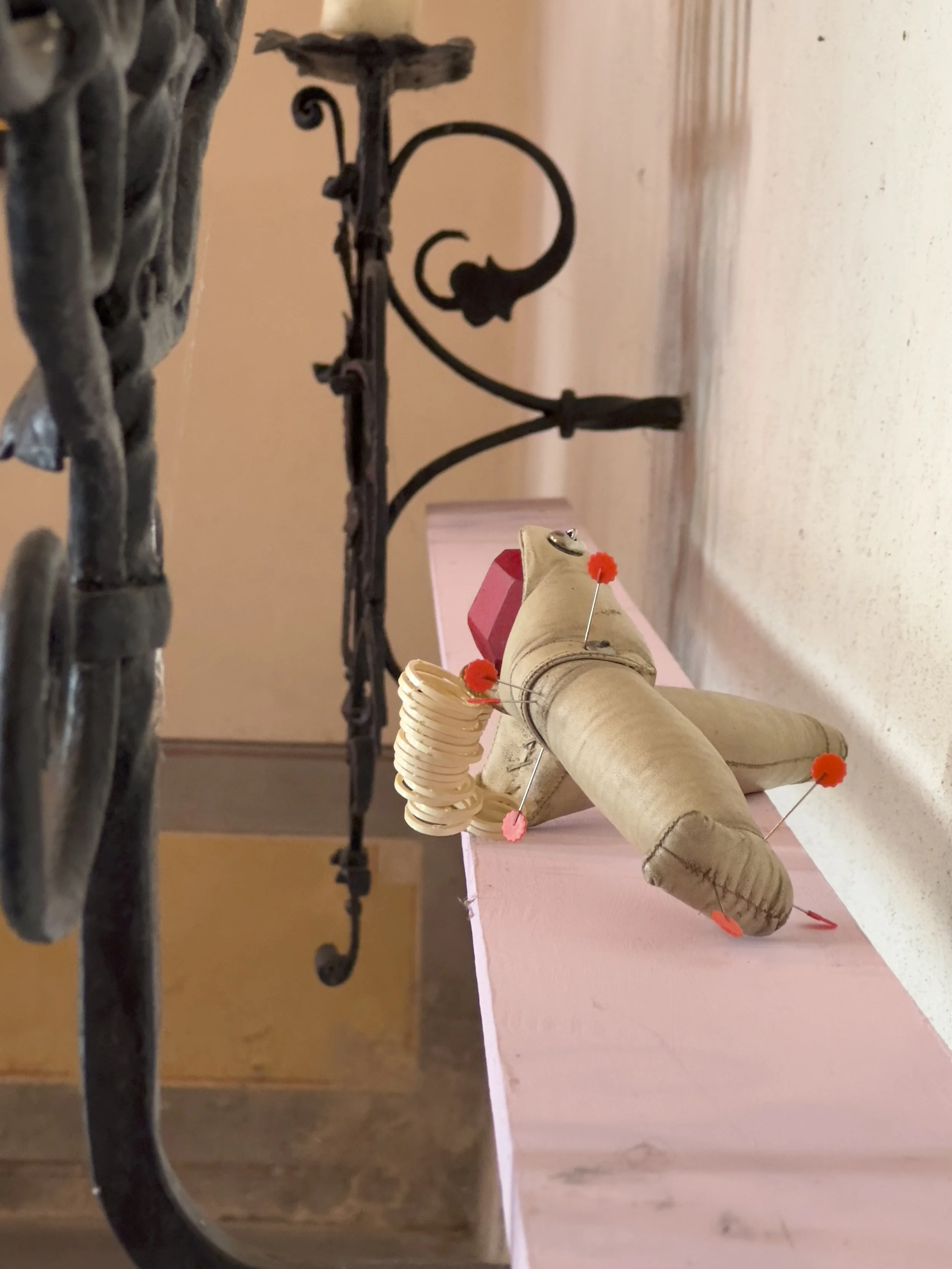
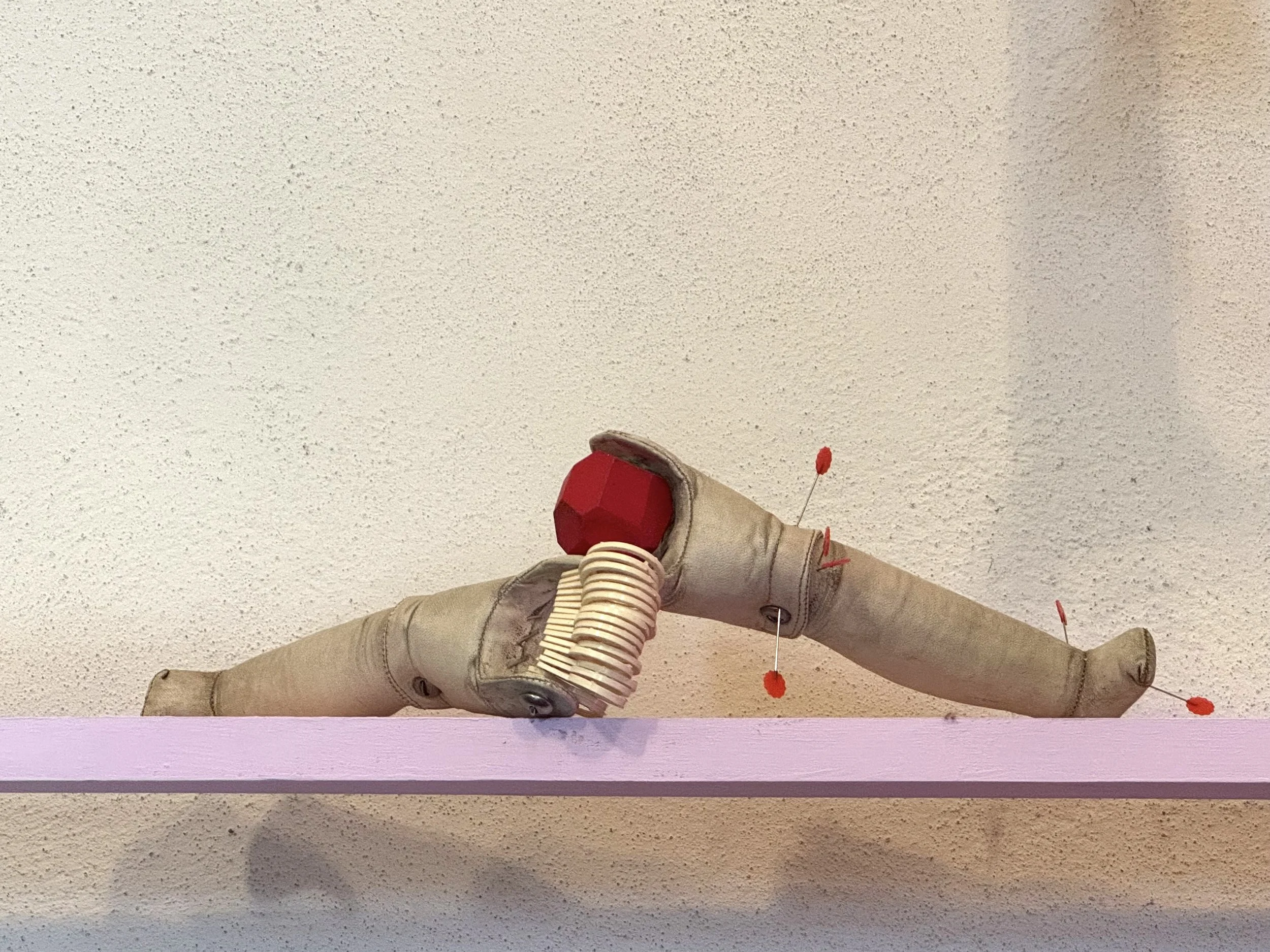
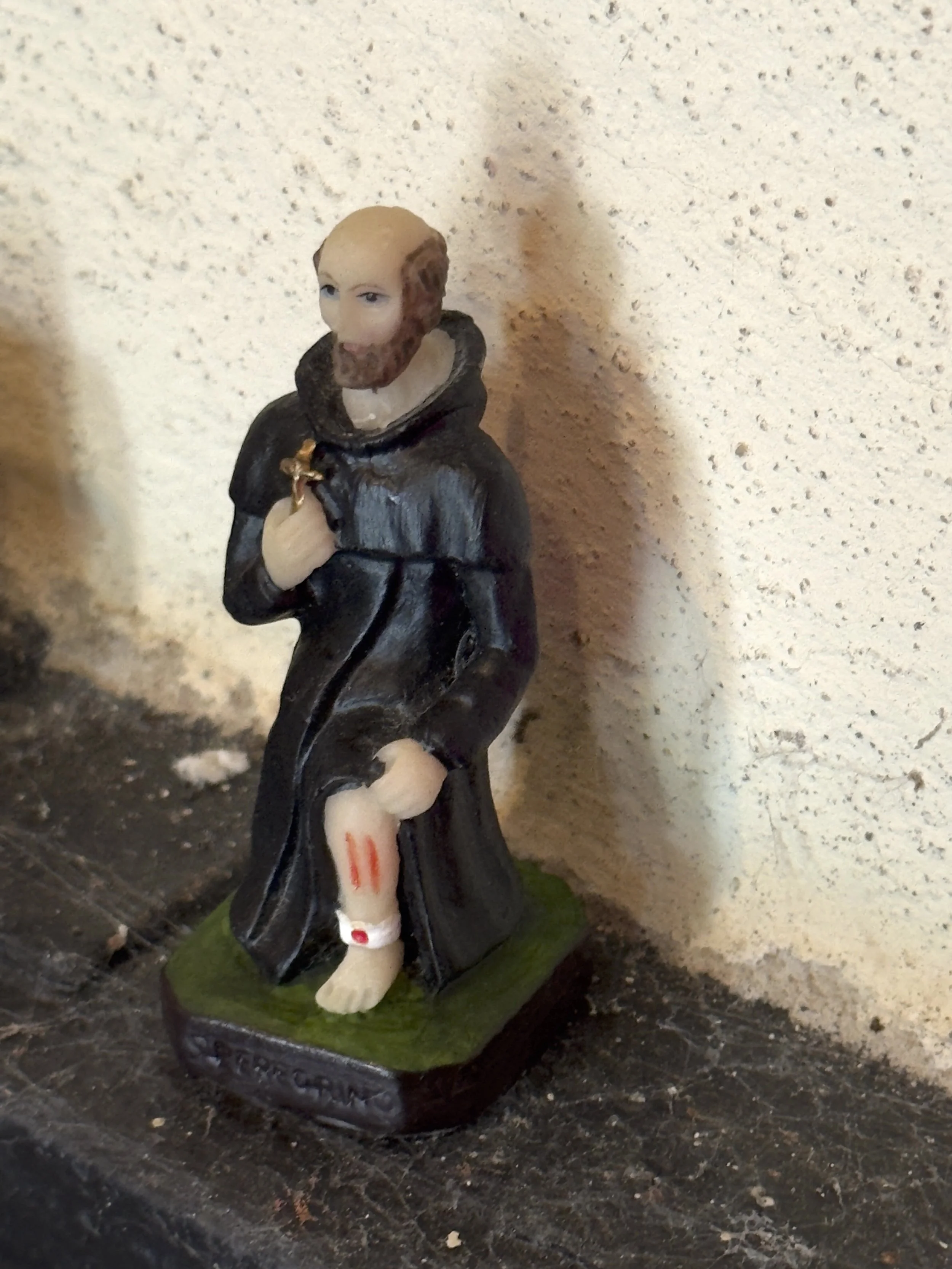
“Take a Seat” 2025
Component 1: Vintage canvas limbs, wooden bead, quilting pins, ring sizing set.
Component 2: Found figure of St. Peregrino.
Photo credit
Traci Kelly
Material
“Take a Seat” 2025
Component 1: Vintage canvas limbs, wooden bead, quilting pins, ring sizing set.
Component 2: Found figure of St. Peregrino.
Photo credit
Traci Kelly
Material
“Take a Seat” 2025
Component 1: Vintage canvas limbs, wooden bead, quilting pins, ring sizing set.
Component 2: Found figure of St. Peregrino.
Photo credit
Traci Kelly
Photo credit
Traci Kelly
Photo credit
Traci Kelly
Material
Bovine bone, matches, mirror.
Photo credit
Traci Kelly
Material
“Falling Holding” 2025 Single channel video with sound and reliquary cabinet.
Photo credit
Traci Kelly
Material
“Falling Holding” 2025 Single channel video with sound and reliquary cabinet.
Photo credit
Traci Kelly
Material
“Open” 2025 Paper fretwork, elastic band, devotional book
Photo credit
Traci Kelly
Material
“Heaven on Earth” 2025 Lens on stone memorial pillar on ground just outside the rear leper’s entrance.
Photo credit
Traci Kelly
Material
“Heaven on Earth” 2025 Lens on stone memorial pillar on ground just outside the rear leper’s entrance.
Photo credit
Traci Kelly
St. Jost (Sankt Jodicus), public entrance.
Photo credit
Traci Kelly